You are leaving girlscouts.org for a website opened by an external party. You will be subjected to the privacy and security policies of the website

A Legacy of Service: Girl Scouts and Our Military Community
"The Scout laws and promise are of no value unless translated into deeds of real service" -Juliette Gordon Low, 1917.
As we celebrate the second anniversary of Girl Scouts Nation’s Capital Salute to Service Initiative, we want to take a moment to recognize the longstanding connection between military service and Girl Scouting. For generations, Girl Scouts have supported service members and their communities through acts of service, leadership, and volunteerism. Service-connected families have also been an important part of the Girl Scout community, bringing their experiences and perspectives and helping to strengthen the movement.
Since its founding in 1912, Girl Scouts has centered around the importance of serving others. During World War I and World War II, Girl Scout training came in handy primarily through their first aid knowledge, giving "hours of volunteer service to the Red Cross, relief agencies, hospitals, clinics, and other welfare groups (The National WWII Museum)." They also used their knowledge of food conservation to open emergency kitchens, provide meals to service members, and feed their local communities. The first recorded Girl Scout cookie sale also took place during WWI, in 1917, when a troop in Muskogee, Oklahoma, baked and sold cookies as a service project.
This hard work did not go unnoticed. Then Secretary of the U.S. Food Administration (and future U.S. President), Herbert Hoover, wrote to Girl Scouts founder Juliette Gordon Lowe on several occasions, thanking Girl Scouts for their food conservation efforts during the war.
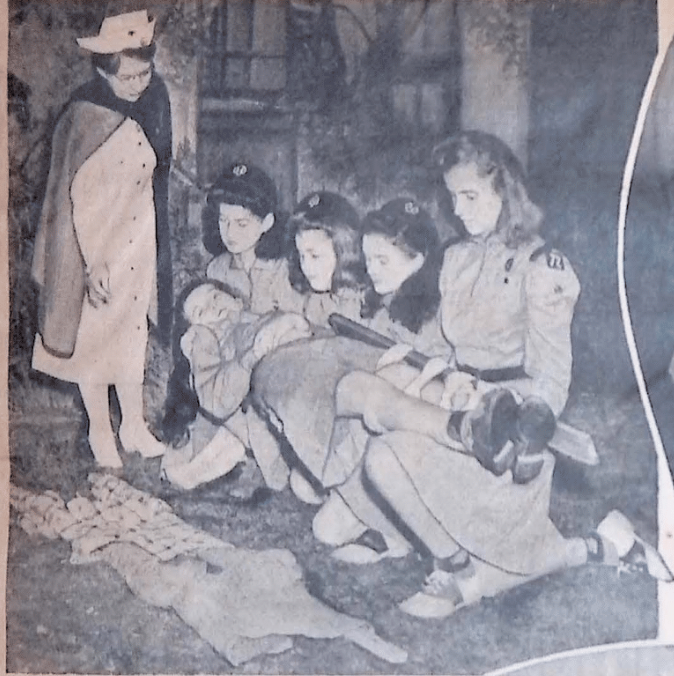
(Caroline E. Thomson, of the Red Cross, Mary Ellen Barrett, Jeanne Thompson, Kathryn Barnard, Harriet White, and Marjorie Barnard demonstrating first aid with an improvised stretcher. Times-Herald, October 26, 1941.)
Over the years, Girl Scouts have also created several programs to help their community in times of need. World War II, in particular, brought new opportunities for Girl Scouts to put their skills in action to support the nation in a variety of ways.
Girl Scouts During WWII
During World War II, Girl Scouts created a victory fund with the US Treasury called the Minute Maids, which allowed them to buy and collect war stamps. These stamps were converted into war bonds, which later helped children abroad recover from the effects of war.
The Senior Service Scout Program was also developed during World War II as a civilian defense program for Girl Scouts aged 15 to 18. This program "emphasized skills for the home front, providing childcare, transportation, communication, shelter, clothing, and food in emergencies (Girl Scouts History Project)." Seniors were also given the opportunity to participate in War Service Projects as hospital aides, emergency outdoor aides, farm aides, and more. This program was vital not only in providing useful life skills for youth during a time of great need, but also in helping them prepare for the workforce beyond their Girl Scouts years.
Another important way that Girl Scouts served their communities during times of need was through the Victory Book Campaign. Girl Scouts gathered books, newspapers, and magazines to send to armed forces on the field and in hospitals. They went door to door, held public resource drives, and partnered with schools and libraries to boost morale amongst troops. This campaign was part of a broader collection of war service projects that included collecting household items, scrap metal, and fur to be used as supplies during the war.
Service has always been at the heart of Girl Scouting. During World War I and World War II, young people found meaningful ways to support communities during great times of need. This commitment to service also helped fuel the growth of the Girl Scout Movement. According to Juliette Gordon Lowe, "In 1915, Girl Scouts had a mere 3,000 members; only three years later, the organization had grown to 100,000 Girl Scouts all working to support the war effort (Juliette Gordon Lowe Birthplace Museum)." These early contributions of service helped establish a legacy that continues today.
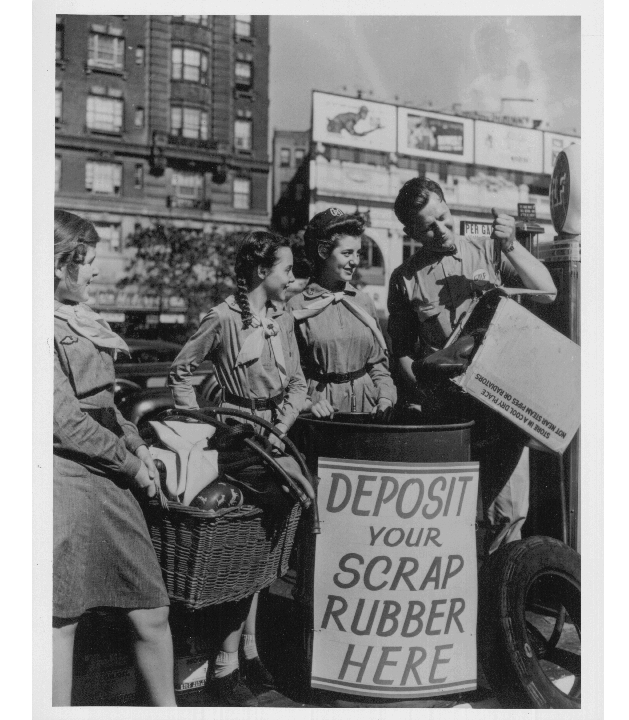
(Girl Scouts collect scrap rubber courtesy of the Girl Scouts of the United States of America, ARC 0001225.)
Girl Scouts Continuing a Legacy of Service
Today, Girl Scouts are serving their communities through higher award service projects. Through recognitions like the Bronze Award, Silver Award, and Gold Award, as well as GSCNC’s Silver Trefoil Award, youth identify needs in their communities and create projects that create lasting change. In 2026, Girl Scouts Nation's Capital recognized 1,120 Bronze Awards, 548 Silver Awards, 148 Gold Awards, and 175 Silver Trefoil Awards. These projects ranged from renovating a school library in El Salvador to sending care packages to teens with extended hospital stays to animal safety and artistic expression!
Another way our youth are staying involved in their community is by participating in our Congressional Aide program. This program allows youth to build connections, expand their network on Capitol Hill, and gain valuable insight into the legislative process by working with members of Congress and their teams. This application-only summer program has been running since 1974 and has allowed Girl Scouts to build their civic knowledge and professional skills while inspiring a lifelong commitment to public service.
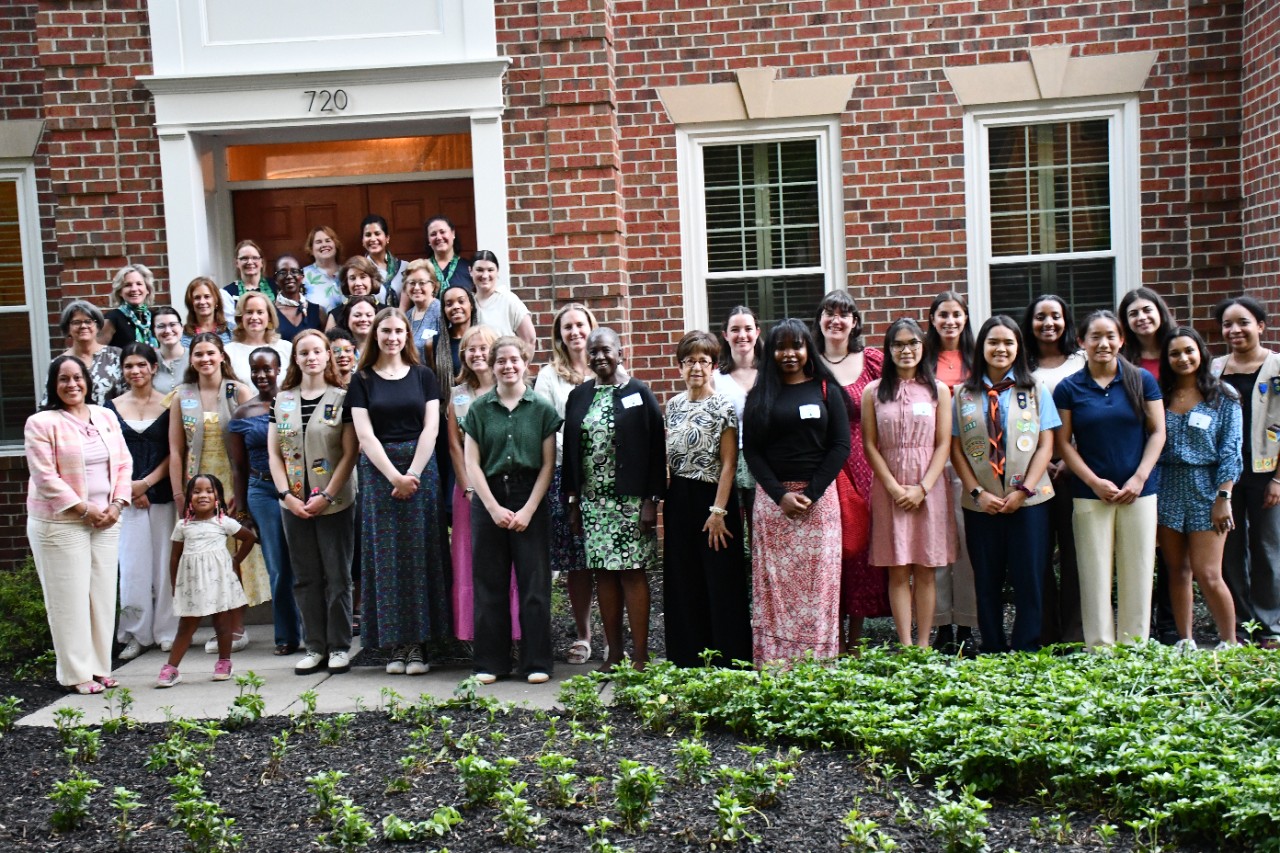
(Girl Scouts Nation's Capital Gold Award Reception 2026)
Supporting Service Families
Just as Girl Scouts have a long history of supporting service members and their communities, we recognize the important role that service-connected families play in Girl Scouting today. Their experiences, perspectives, and contributions are an important part of our movement, and we are committed to ensuring they feel welcomed, connected, and supported. Through our Salute to Service initiative, we are offering connection, belonging, and a strong network that empowers members at every level to continue their leadership journeys, make new friends, and enjoy a welcoming, safe space.
Along with recognizing Veterans Day as a Council holiday, the Council also celebrates the Month of the Military Child and Military Appreciation Month and has a dedicated Salute to Service patch. We are also committed to making sure our service families' voices are heard. Our Salute to Service Advisory Board advises the Council on matters related to service-connected families and brings in the much-needed perspectives of service-connected families.
Recently, on November 7th, GSCNC hosted our Home Base event as part of our Salute to Service initiative. Home Base created an opportunity for service families to celebrate Veterans Day through connection, service, exploration, and play. Beyond the activities, Home Base offered an opportunity for service-connected families to meet one another, share experiences, and build connections with others who understand the unique experiences that come with a life of service. It was also an opportunity to welcome new families and introduce them to the Girl Scout community.
For more Information on our Salute to Service initiative, click here.
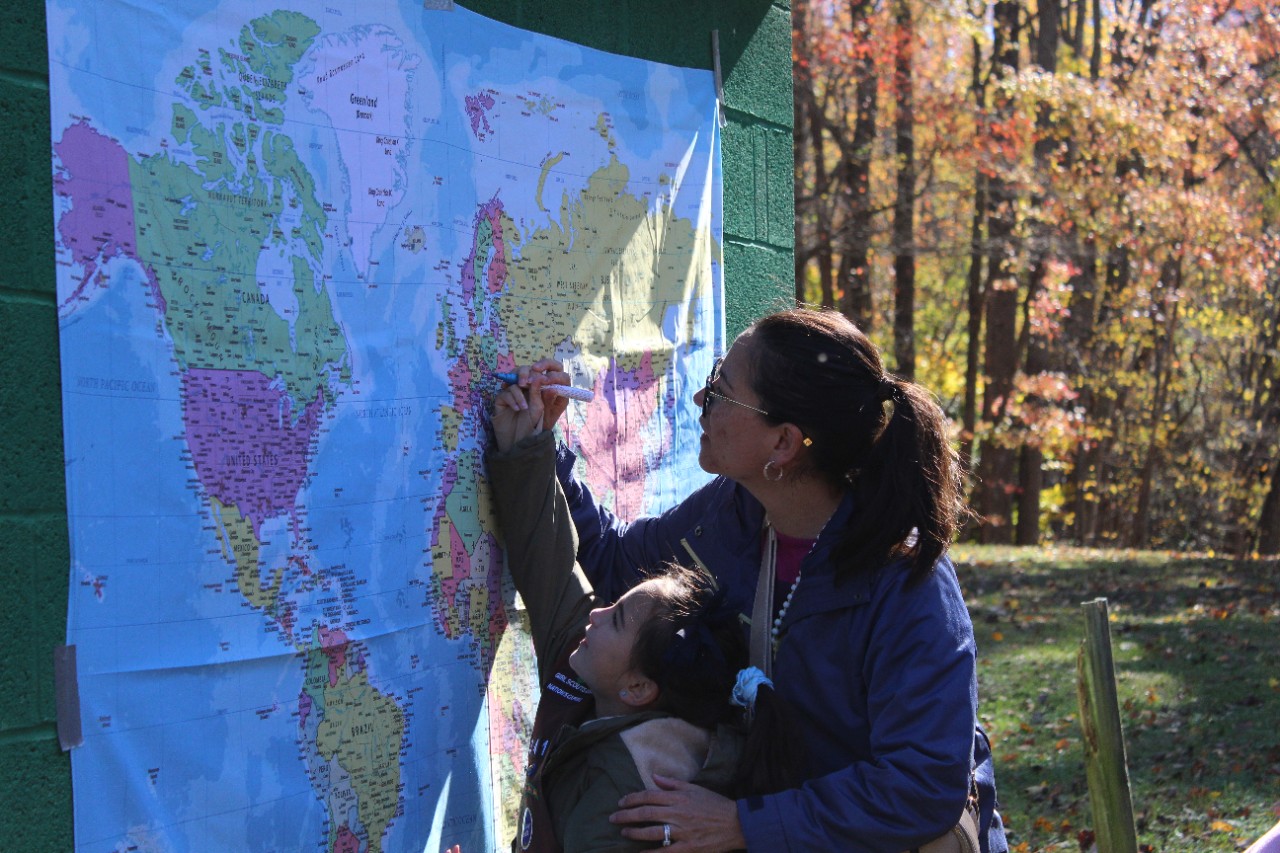
(Girl Scout and Parent marking where they have been stationed, Home Base Salute to Service event, November 7, 2026.)
A Legacy That Continues
From supporting the nation during times of war to leading community service projects today, the fundamentals of Girl Scouting have always been rooted in service. As we celebrate two years of Salute to Service, we recognize the contributions of those who serve, the families who serve alongside them, and the young people who are learning to lead through service every day. Whether it means helping during a time of national need, supporting a neighbor, or building a garden in a local community, service takes many forms. We remain committed to supporting our Girl Scouts and their families throughout their journeys, wherever those journeys may take them.
Once a Girl Scout, Always a Girl Scout.
Want to stay connected with Salute to Service and share your story? Complete this form to let us know how you'd like to stay involved, share your experiences, and stay connected with our community.
